


FIGHT CLUB: THE PARADOX OF ANTI-FASHION
- Sep 20, 2025
- 4 min read
“You are not your khakis.” With one line, Tyler Durden slaps consumer culture across the face. Fight Club screams at us to put the wallet down, but while Tyler preaches destruction, audiences are busy buying his red leather jacket.

The Birth of Anti-Fashion
Anti-fashion is defined as the refusal to play the seasonal game of trends (Ted Polhemus, Fashion and Anti-Fashion). It is both a philosophy and a movement that critiques mainstream fashion, prioritizing individuality, authenticity, and social commentary over commercial appeal or trend-following. The boundary between “instant” fashion and anti-fashion can be blurred, as both engage with identity and the allure of novelty (Lars F. Svendsen, Fashion: A Philosophy).
Anti-fashion, in particular, gained prominence in the 1990s when the fashion world, fatigued by repetitive designs, sought to break through the monotony. Designers returned to the essence of fashion as craft, using techniques such as deconstruction, distortion, and visible tailoring to produce a “shock of the old” or a deliberately unfinished aesthetic, subverting conventional notions of beauty.





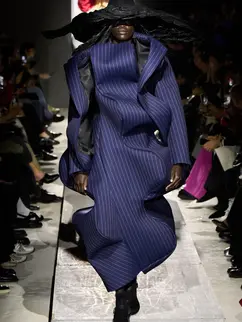


Names. I have tons of names representing Anti-fashion. The giants of anti-fashion include Rei Kawakubo, Martin Margiela, Vivienne Westwood, Yohji Yamamoto, and others. Westwood, the “Mother of Punk,” famously introduced her God Save the Queen t-shirt, blending DIY punk aesthetics to challenge the establishment. Kawakubo, with her empire Comme des Garçons, and Yohji Yamamoto shaped the anti-fashion narrative through radical deconstruction and asymmetry. Martin Margiela is widely regarded as a pioneer of anti-fashion, with his avant-garde approach featuring raw, unfinished garments, repurposed materials, and an emphasis on anonymity over branding.

Anti-fashion is original, timeless, and true to the DNA of art and creation. It is a voice of inclusivity and self-expression, a rebellion against conformity and commercialization. Yet what begins as a black sheep of fashion inevitably enters the commerce it critiques—a paradox we will explore in the next section.
Anti-Fashion through Fight Club
The Narrator: A Walking IKEA Catalogue
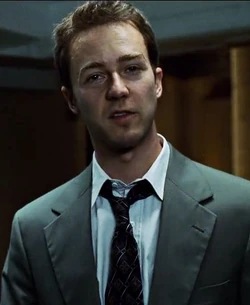
Edward Norton’s Narrator is dressed in the uniform of the consumer drone: bland suits, button-ups that don’t quite fit, and of course, khakis. His wardrobe is as pathetic as his worthless existence: “beiges and greys, terrible neckties, and awful polyester dress shirts that you could just fall asleep looking at”. He is anti-fashion not out of rebellion but out of vacancy. He dresses like a human spreadsheet, a man defined by “functional” clothes that function only to erase his existence. The Narrator doesn’t own clothes; clothes own him.






Tyler Durden: The Rock Star of the Thrift Store
Then Tyler Durden (Brad Pitt) enters like the ghost of every anarchist wet dream. Red leather jacket, loud printed shirts, tinted sunglasses, trousers that look stolen from a pimp’s donation pile. He dresses with the confidence of a man who has never read a washing label in his life.

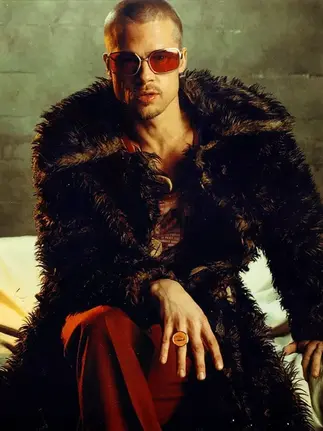

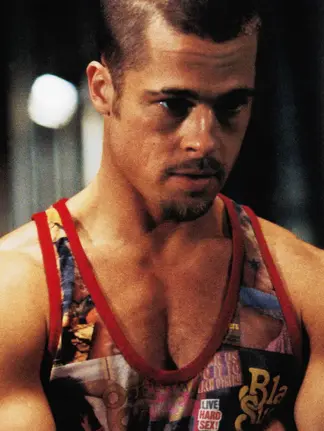

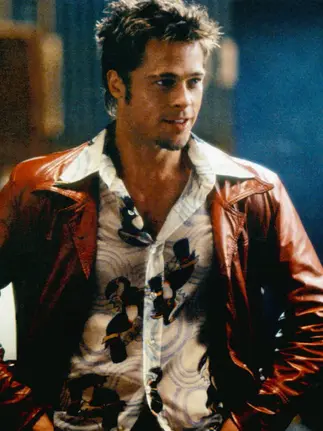
Oversized red leather jackets hinting at violence, inside with Hawaii shirts, iconic ‘HUSTLER’ mesh shirts, the long fur coat, and porno print t-shirts. Look closer and the contradictions pile up: he rants about raw masculinity while wearing hip-hugging pants that could be mistaken for women’s cuts. Nothing matches, nothing makes sense, and that’s the point. Tyler’s style is a giant middle finger to both corporate uniforms and “real men wear X” clichés. It’s curated chaos — anti-fashion at its flashiest.


Marla Singer: The Glamour of Ruin
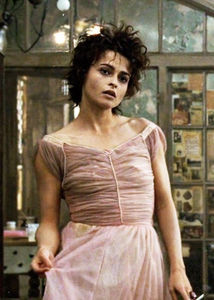
And then there’s Marla Singer, the true anti-fashion icon of Fight Club. She is a woman with no history to speak of, no introduction, no-hope existence. She arrives in a haze of cigarette smoke, drowned in sunglasses, lipstick, and despair. Her look? Thrifted entropy: moth-eaten furs, wrinkled slips, velvet, lace, makeup smeared into gothic ruin. She is rebellious without performance, authenticity without polish — the glamour of collapse, a late-90s “heroin chic”.
If Tyler is anti-fashion commodified, Marla is anti-fashion unfiltered: seductive, disordered, disturbingly real. She doesn’t play the game, she throws the board out the window.






Joke’s on Us: The paradox of Anti-fashion
Here’s the cruel punchline: anti-fashion always loses. The second it’s seen, it’s sold. Two months after Fight Club, Donatella Versace launched her “Fight Club Collection.” Tyler’s jacket — once meant to mock consumerist style — became a staple, endlessly replicated in faux leather. Marla’s thrift-store chic turned into luxury “I woke up like this” grunge, sold at designer prices. Even the Narrator’s khakis found new life in normcore minimalism.

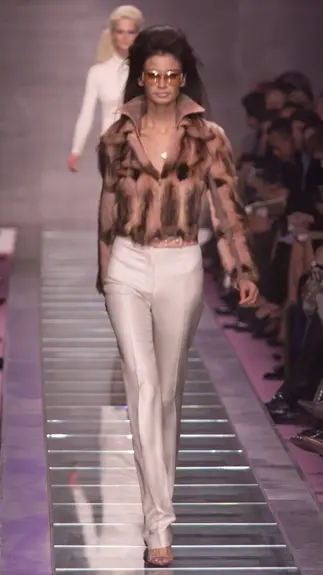

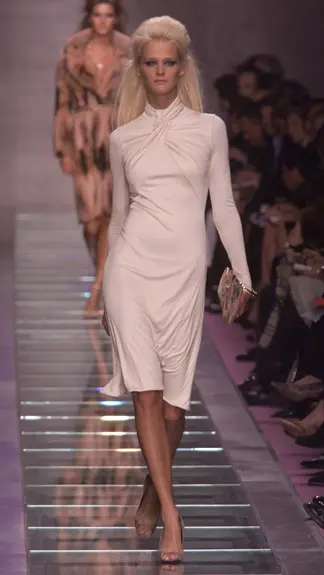


The irony here is that we copy Tyler and Marla not to express individuality (who they are), but to buy the illusion of it (what we want to be). Just like IKEA man, only in louder colors. Today, with Y2K fashion back, the streets are full of Tyler Durden clones — except these ones don’t sell soap.

By rejecting trends and wearing “weird, clumsy”, you are unique proud while being stared and asked, “what the f*** are you wearing?”. Think of ’70s hippies, ’90s grunge, it’s not just a style but more of a “five a sh*t” attitude towards fashion and what you need for functionality.

The same happens in high fashion. What begins as rejection ends up canon. Yohji Yamamoto, Rei Kawakubo, and Issey Miyake once shredded glamour with all-black, asymmetrical, and androgynous designs. At first, they were anti-fashion. Now? They’re Parisian uniforms.
Conclusion: You Are Not Your Khakis, But You Might Be Your Leather Jacket
Fight Club is a cinematic ode to tearing down consumer identity, yet it demonstrates precisely why anti-fashion always fails: rejection itself becomes desirable. We don’t just consume clothes — we consume the idea of not consuming them.
Anti-fashion, at its core, is supposed to be refusal — a way of saying no to trends, no to conformity, no to selling out. But the film shows how quickly that refusal turns into a new kind of uniform. Tyler Durden wanted to burn the system down. Instead, he became a Pinterest mood board. Marla’s ruinous glamour turned into runway chic.
That’s the paradox: anti-fashion doesn’t kill fashion, it feeds it. What begins as rebellion ends as a product line. You can scream “you are not your khakis” all you want, but the moment you buy the jacket to prove it, you’re back in the catalog — only now it’s anti-fashion you’re consuming.
Buy what you want. Wear what you like. But know why you own it, and what purpose it serves for you. Otherwise, it’s not anti-fashion. It’s fashion anti-you.



Comments