


[EXHIBITION]
PACO RABANNE:
METAL, CINEMA, FUTURITY
Immersive exhibition proposal exploring Paco Rabanne through cinema and metal couture
Role: Curatorial concept & exhibition design (team project)
Context: MA Exhibition Proposal
Location: Paris, Pathé Foundation (proposed)
Year: 2023
Duration: 1 year
PROJECT OVERVIEW
This exhibition positions cinema as a central framework for understanding Paco Rabanne’s work. Beyond metal couture and experimental materials, Rabanne used film as a site for speculation, performance, and futurity.
By placing fashion and cinema in dialogue, the exhibition reframes Rabanne’s garments as cinematic objects shaped by movement, light, and narrative.
CURATORIAL APPROACH
-
Cinema as an expanded field of fashion practice
-
Metal couture as structure rather than surface
-
Retrofuturism as a temporal strategy
-
Exhibition structured as a cinematic journey
EXHIBITION JOURNEY


01
Ticket Booth
Entry designed as a cinema ritual.
04
Retro Room
1960s cinema, archival material, and garments.
02
Trailer Room
Commissioned film introducing the exhibition narrative.
05
Future Room
Speculative environment of metal, light, and projection.
03
Bar Souvenir
Candy bar, coffee shop and Paco Rabanne books, gifts or souvenirs
06
Cinema
Screenings of five films featuring Rabanne designs.
CURATORIAL STATEMENT
PACO RABANNE:
METAL, CINEMA, FUTURITY
This exhibition proposes cinema as a central lens through which to understand Paco Rabanne’s work. Known for his radical use of metal and industrial materials, Rabanne consistently approached fashion as a speculative medium. Cinema provided the space in which this speculation could move, perform, and project itself into the future.
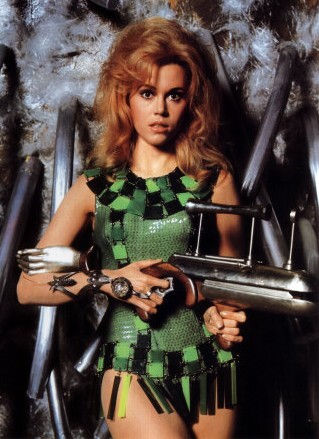
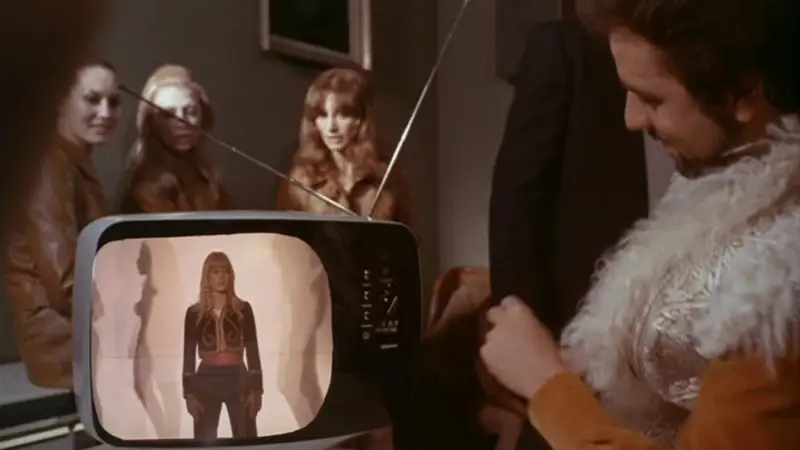
Rather than treating film as a secondary context, the exhibition positions cinema as an expanded field of Rabanne’s practice. Through costume design, on-screen appearances, and cinematic collaborations during the 1960s, Rabanne used film to test the boundaries of clothing, technology, and the body. His garments did not merely appear on screen; they shaped the visual language of futurity and modernity.


Metal couture operates here as both material and metaphor. Constructed rather than sewn, Rabanne’s garments function as structures that echo architecture, machinery, and cinematic sets. In film, these structures are activated by movement, light, and sound, revealing fashion not as a static object but as a performative system. Cinema allows Rabanne’s work to exist in time, restoring rhythm, gesture, and narrative to clothing.
The exhibition unfolds as a cinematic journey. Visitors do not move chronologically, but narratively, passing through spaces that mirror the grammar of film. Entry is framed as arrival at a cinema, establishing spectatorship as a curatorial device. A trailer introduces Rabanne’s universe through montage, sound, and projection, situating the visitor within a hybrid space between fashion exhibition and film screening.


From there, the exhibition divides into two temporal conditions.
The first engages the 1960s as a moment of cultural rupture, experimentation, and political change. Archival film material, vintage cinematic tools, and garments situate Rabanne within a decade that reimagined the body and its freedoms. The second space projects forward. Here, metal, reflection, and moving image construct a speculative environment, echoing Rabanne’s vision of futurity as something structural rather than decorative.
Cinema remains present throughout. Films such as "Who Are You, Polly Maggoo?" and "Barbarella" are not presented as references, but as active components of the exhibition. Their imagery informs spatial design, soundscapes, and material choices, allowing fashion and film to operate as a single system. The screening room functions not as an endpoint, but as a return to origin, where the visitor encounters Rabanne’s work in its fully activated state.




By immersing the visitor within cinematic space, the exhibition challenges conventional fashion display. Garments are not isolated artifacts but participants within a larger visual and temporal framework. The body, both dressed and spectating, becomes central. Movement through space echoes movement on screen, collapsing the distance between observer and object.
Ultimately, Paco Rabanne: Metal, Cinema, Futurity reframes the designer’s legacy as one of authorship across media. It argues that Rabanne did not simply anticipate the future aesthetically; he constructed it structurally. Through cinema, fashion became speculative architecture for the body, capable of imagining new ways of inhabiting time, space, and identity.